EVOC

Supporting the people and communities of Edinburgh since 1868.

Menu 
  • Home
  • About Us
    • Vision, purpose and values
    • Contact Us
    • Board
    • Staff
    • Membership
    • Reports and Consultation Responses
    • Vacancies
    • Edinburgh’s TSI
  • Forums & Networks
    • Carers Forum
    • Chief Officers Group (Edinburgh)
    • Children, Young People & Families Network
    • Disability Forum
    • Mental Health Forum
    • Older People’s Service Providers’ Forum
    • Place-based Networks
    • Social Enterprise Network
    • Strategic Place Forum
  • Our Work
    • Children, Young People & Families
    • Edinburgh’s Response to Ukraine
    • New Scots Edinburgh Refugee Integration Strategy
  • Funding
    • Current Funding Opportunities
    • Edinburgh Community Lottery
    • Community Benefit Gateway
    • Communities Mental Health & Wellbeing Fund
      • Communities Mental Health & Wellbeing Fund: Year 5
      • Communities Mental Health & Wellbeing Fund: Year 4
      • Communities Mental Health & Wellbeing Fund: Year 3
      • Communities Mental Health & Wellbeing Fund: Year 2
      • Communities Mental Health & Wellbeing Fund: Year 1
  • Training
    • Our Commitment to Quality Training
  • Need Help?
  • News
    • Events, Seminars, & Workshops
    • EVOC Blog
    • Our Latest E-newsletters
  • Noticeboard
You are here: Home » Archives for Blog Posts

Procurement – an opportunity for positive change?

28 March 2016 By EVOC Comms Leave a Comment

You might well feel confused by the language of procurement.  Try getting your head around grants, competitive tendering, standing orders, service level agreements, service redesign, waivers and EU regulations! You may however have felt some recent impact in Edinburgh, as grants are changed to alternate procurement processes, and coproduction is an expectation of the sector in looking at service redesign. 

Here at EVOC our heads are just about exploding trying to input to the numerous live service redesigns as well as trying to read the small print in the competitive tendering and grants processes.   What seems like common sense to us can sometime just be quickly dismissed with the mention of EU legislation, but should it be? 

With the transformation programme at the City of Edinburgh Council, all purchase of external services from the very start of a process will now go through the procurement team and will no longer be decided by departmental service delivery teams.  Hopefully this will mean process will become more consistent – but at what cost of standardisation?  EVOC have been asked to work with the Procurement team to try and ensure that some of the recently contested and we would argue unfair practices disadvantaging small local organisations that we have seen recently can be mitigated. We of course understand the need to stay within EU procurement law but maybe there are ways of working that will mean the small local organisation is given a fairer more level playing field. It is complex, but not impossible – it takes courage and a real will.

Afterall, if the law is supposed to make procurement fair – what is fair about enormous national organisations with bid-writing teams hoovering-up local contracts against medium-sized £500k turnover charities embedded within, and indeed started by, local communities?

The first meeting held was extremely positive; really listening to what we had to say and reassuring us that change to process is possible. An open ongoing dialogue is really what we hope for, with our advice and guidance being sought for the new CEC procurement guidelines and our input early on in the procurement process, rather than at a stage where it is too late to do anything.  

All too late for some we know, as we see organisations around us closing, but perhaps this process can reduce the future issues and promote true coproduction with communities and the organisations that were set-up by them.   At this time of the introduction of localities surely the small local organisation has an even bigger part to play with its specific local knowledge and its ability to be quick and responsive without the bureaucratic ties of large public sector organisations.   

Come on City of Edinburgh Council you can do it – procure to be bold!


We aim to hold a thinkSpace to consider these issues in late spring 2016.  Please keep a look out here for details: https://www.evoc.org.uk/thinkspace/events-programme/

Person centred support and prevention in partnership – Sara’s blog

23 February 2016 By EVOC Communications Team Leave a Comment

Copy of we will be (2)

I am a financial inclusion worker with the Recovery Essentials Project in Edinburgh – we work in partnership with drug and alcohol agencies to provide welfare rights and financial inclusion support to service users. This case study highlights the importance of the work we do to the individuals we work with – it is one case of many. I am based one day a week at a service for people tackling their addictions. Many of the service users are chaotic and homeless or at risk of homelessness.

Mr X was referred to the Recovery Essentials service last year by partner agency staff for support with rent arrears and challenging benefit decisions. Prior to this he had no engagement with other services and his drug use had spiralled. Without Social support his tenancy had been put at risk and he had no source of income which led to offending behaviour. 

When I met the client he had over £4,000 rent arrears due to no housing benefit payments and the fact that he is a single person in a 2 bedroom flat affected by the under-occupancy rules.  We have worked to bring down the arrears by over £2,500. Housing Benefit, Discretionary Housing Payments and Council Tax reduction claims have been made and are in payment. He had a court date for eviction and I referred him to Edinburgh Housing Advice Partnership – we learnt this week that this action has been continued thanks to his having set up a repayment arrangement.

Throughout my time working with Mr X he has shown real resilience and commitment to dealing with things head on via support. Initially he had no source of income and he has continued to come across many barriers through the benefit system, as the DWP believed that he was fit for work and failed his ESA claim.  While jumping through the necessary hoops Mr X had to claim JSA at £73.10 weekly, request a Mandatory Reconsideration of the ESA decision and subsequently also an appeal which was successful.  Mr X was deemed unable to take part in any work related activity. He has been placed in the Support Group for 2 years. His income will considerably increase to £125.05 per week for ESA Support Group component and the Enhanced Disability Premium. Because of the award and the length of time it has taken to establish the claim he is due to get a large backdate of £5,627.67.  He had been using a simple payment card so I supported him to obtain appropriate ID and to open a bank account. This now means that he does not need to withdraw his backdate in one transaction. 

For some people in Mr X’s situation receiving large back payments can prove dangerous – even fatal.  He says that he has felt unsettled by having such a large sum of money available and has had to work hard to resist temptation to spend it.  He is planning to use some of the money to improve his home and also to save some of the money for his children’s future. He is working incredibly hard to live a life with stability, however he has experienced difficult periods in his life with substance dependency. He has responded well to the support that he is getting.  His case highlights the importance of embedding person-centred services and close partnership working have been able to make real changes in people’s lives and fully support their recovery.

The total financial gain through this intervention will be £21,095.22 – not to mention the prevention of eviction, improvement of living conditions and most of all, the stability in Mr X’s engagement with his recovery.

In his own words, the impact of the help he has received is as follows:

“Well where to start…I came here very much at the depth of despair in October 2015 for help with a few things. When I met Sara to cut the story short I got back the money that was taken off me last February. Sara kept pushing me to take the next step. I did not know how to go about getting my benefit sorted out. I went back down the road of drug addiction through my life circumstances. It was a terrible place to be but if Sara did not help me I think I would have lost everything that I got back. Now that I have been put back on ESA my life feels like I have a chance to get better with not as much pressure. If Sara did not make me believe that I had a chance of getting my benefit I would not have done it. So with the help of Sara and a few other people I now feel a lot better. Now I can have a chance of life that was nearly taken away from me. And Sara had a big part to play in that.”

About Tackling Welfare Reform in the Round

2 February 2016 By EVOC Communications Team Leave a Comment

Tackling Welfare Reform in the Round is a series of roundtable discussions which aim to find collaborative solutions to mitigate the impacts of welfare reform.

The roundtable events in Edinburgh are jointly hosted by SCVO, EVOC and Inclusion Scotland.  The first event took place in December 2015 and was well attended by representatives from across the Third Sector and the City of Edinburgh Council. During the event, Calum Ogden from Citizens Advice Edinburgh presented on the impact that welfare reform has had on advice services. There was also a presentation about partnership working by Gillian Ritchie from the City of Edinburgh Council. Gillian presented examples of successful partnership working including the partnership between the Department for Work and Pensions and the City of Edinburgh Council to create a Delivery Partnership Agreement.

For the first discussion, participants were placed into groups to answer the following questions:

  • Why is welfare reform a problem?
  • What do we want to tackle?
  • What would make welfare reform easier to deal with?

Five central themes emerged from the responses in first discussion and were used as themes to be discussed in the second discussion

  1. Cultural Change
  2. (Online) Directory and Referral Service
  3. Preventative Work and Capacity Building
  4. Localisation and Personalisation
  5. Information and Communication

Participants were invited to select a theme and create and action plan using the following questions as a guide

  • What good work is already happening?
  • What more can we do?
  • Who else should be involved?

There were many great ideas circulated and groups were eager to put their plans outlined during the discussion into action.

For further information about the topics discussed, please see the event notes.

A second Tackling Welfare Reform in the Round event has been scheduled at 1pm on the 24th March 2016. To register for the event, please go to www.welfareroundtable.eventbrite.co.uk

Competitive tender 1 – Coproduction 0

12 January 2016 By EVOC Communications Team Leave a Comment

Before Christmas I wrote a blog, full of hope that the risks of competitive tender were being taken seriously by Edinburgh Council. The decision of whether to award contracts to a UK wide organisation in favour of three local organisations, which had grown up from within their communities over thirty years, was deferred. Another meeting was set for 14th December to allow the issues we raised to be explored in more detail.

On behalf of Edinburgh’s Substance Use Network (SUNE), EVOC had voiced the extent to which the principles underpinning an 18 month process of collaboration had been undermined by a starkly one-dimensional competitive tender process. A tender process which was presented by procurement officers as the only way forward, when the reality was not so black and white. Investigating further we discovered additional concerns. Service users had not been consulted about the decision to put the recovery hub service out to tender, as the Scottish guidance makes clear they should be. GPs, who have very close working relationships with these organisations, had not been consulted either. The considerable risks to vulnerable service users of the likely transition of services had not been raised in the Equality and Rights Impact Assessment, nor had they been taken into account in any other part of the process.

Procurement decisions are being wrongly presented as black and white, with the phrase ‘EU legislation’ being used to intimidate people out of arguing for an alternative. But EU procurement legislation does specify that contracting authorities may take into account factors such as the need to ensure continuity, specific needs of different categories of users, and the involvement and empowerment of users.  Aside from this, EU legislation is broad, it has social as well as economic dimensions and compliance with procurement law is not to be allowed to hinder social justice and protection.

The local communities in question objected to what was being taken from them. In one of the three areas over 500 people signed a petition in the space of a week. Signatories included Richard Simpson MSP (a psychiatrist with a history working within addiction medicine), as well as many service users and family members.

One person commented:

“A community service should be exactly that, something that has grown up in the local community. What the decision makers don’t seem to appreciate is that when we are not well, we struggle with change, familiarity and consistency keeps us well, it is important for us to be able to trust the service that we confide in”.

We raised these concerns on 14th December in a deputation to Edinburgh’s Finance and Resource Committee.

We asked that in the rush to avoid the risk of not going to tender, the risks of going to tender were not ignored. The risks to locality working, total place and coproduction, the risks of losing organisations which have grown out of communities in response to their needs, the risks to the relationships carefully built with the third sector and moreover the risks to the very outcomes these services work to achieve for vulnerable people. We asked that in this balancing act, these risks be recognised and given the weight they deserve.   

Also making a deputation was John Budd, a GP speaking on behalf of the Deprivation Interest Group[1] (DIG) – a broader group of GPs working with the most deprived communities. He did not mince his words and spoke of the shock expressed by DIG members about the way in which this decision had been made. Among a range of points he relayed the concerns expressed about both the decision but also the attitudes it displays about the Council’s approach to partnership working.

He said:

“I would suggest that you are putting the goodwill and faith of GPs at risk through this decision. And certainly they will think long and hard before they commit their time and efforts into engaging in a process that seems so easily undermined. Now I have never had a response from GPs like that before”.

In the end, it seems that the points made were not deemed sufficient for the Council to admit that they had made a mistake. With the exception of Green councillor Gavin Corbett, whose amendment was not seconded, councillors stood firmly together behind the decisions already made. The Council’s main point of rebuttal seemed to be that coproduction does not mean co-delivery, and this is entirely accepted by all involved.

Surely though this is not what coproduction looks like either? Working in partnership with small organisations understood as being ‘not equipped to handle a full tender process’ to the point where their expertise and local knowledge has been downloaded. Whereupon a procurement process is implemented which firstly cannot take into account their (apparently valuable) local knowledge and secondly which was identified in advance as being likely to exclude them from future business. This is not the griping of one organisation which lost a contract. It simply illustrates that a rigid insistence on competitive tenders will systematically wipe out the diversity of service providers, and favour large organisations which write slick tenders.

It is very disappointing that the contradictions of this process were not fully acknowledged. In the struggle to find a balance between coproduction and competitive tender, coproduction has undoubtedly lost this match and made casualties of NEDAC, CHAI and Castle Project (and possibly the goodwill of GPs to boot). I would like to use this opportunity to recognise the immensely valuable work these organisations have delivered for the communities of Edinburgh.

It’s a new year and so we will look ahead. We have an offer from the Council to participate in a review of these issues, as well as new guidance due from Scottish Government. At EVOC we hope to use the lessons learnt here to work with partners to show what coproduction should look like, improve the way decisions are made, and ultimately the outcomes for the people of Edinburgh.

Watch the 14th December webcast here.

[1] John Budd is also a board member of NEDAC, and he stated this during his deputation but offered evidence of broad concern expressed by DIG members and other GPs.

Can Coproduction and Competitive Tender Coexist?

3 December 2015 By EVOC Communications Team Leave a Comment

Finance and Resource Committee meetings are not known for drama, but last Thursday came pretty close in Edinburgh’s Council Chambers. 

Among the agenda items was the recommendation to award 3 of 4 contracts for Adult Community Treatment (otherwise known as Recovery Hub) Services to the large UK charity Lifeline, and one to Turning Point Scotland. On the face of it this seemed logical, these providers having scored highly in the bid process.

However, the back story is far more interesting, and worrying. For the last two years a Hubs Alliance, made up of current providers Castle Project, CHAI, NEDAC and Turning Point Scotland have been working collaboratively within a Hubs Alliance to redefine the service model. They entered the process in the hope that it would not end in competitive tender, due to statements like this:

“We have a number of relatively small 3rd Sector organisations who contribute significantly to our system of care. The services they provide have rarely been secured competitively through grants or tender and many are not equipped to manage a full tender process. We need to identify a process which does not exclude these organisations from future business where they already have the skills, capacities and organisational qualities to deliver the services we need.” [1] 

This aim was certainly not delivered when the decision to go to competitive tender was made. Procurement decisions are often presented as being unavoidable with terms such as ‘EU legislation’ used to trump further questions. But Councils have far more discretion than they would have you believe and it is in fact a question of weighing up different kinds of risk.

While we await the detailed guidance from Scottish Government, the Procurement Reform (Scotland) Act has picked out health and social care services for good reason – they are often very complex services with human relationships at the heart of them. Competitive tender is simply too blunt an instrument to take the broader spectrum of factors into account to achieve the best results for all concerned.

For example, throughout the process, the importance of the hubs being ‘anchored in their local community’ has been emphasised. Considering the stigmas around substance use and the sensitivities around getting potential services users to a point where they are willing and able to engage, the need for a known and trusted organisation cannot be underestimated. Lifeline, a UK wide organisation, have delivered the Edinburgh and Midlothian Offenders Recovery Service in Edinburgh for the past 18 months. Their local knowledge and community links cannot compare to that of the three smaller organisations, which have grown up within their communities over 30 years. Despite the narrative, it doesn’t seem that this element has been significantly valued in this process at all.

The experience of any provider in writing tenders however has far too much influence on the process. Large organisations have skilled teams for this, whereas for smaller resource stretched providers (who have to deliver the day job at the same time) it often boils down to managers who have often never been through such a process before making time out of working hours to get it done. The outcome was entirely predictable – the EADP identified that many providers were not equipped to manage a full tender process, and they were right. Providers have been left with the distinct impression that for the Council, coproduction takes you so far, after which time it’s back to business as usual.

The recommendation, if passed, will result in a massive loss to the community. Castle Project and NEDAC will cease to exist without this funding and CHAI would be massively reduced in capacity. But beyond this there are broader questions to be asked about the inevitable tensions between coproduction and competitive tender in the longer term.

How can this possibly be in keeping with the Transformation agenda and locality working? This recommendation will mean the loss of a diversity of approaches which have developed organically in response to local need. Surely this flies in the face of how the Council say they want to deliver services?

Equally, how can the Council commit to the principles of coproduction if this is the likely result? There is a real danger that rather than being a constructive process working with providers, service users and carers to get the best outcomes for all concerned it will be increasingly seen as a mechanism where local organisations are leached of their expertise to inform a new service model. Then promptly replaced by a larger organisation in a competitive tender. Other providers we are working with are already asking themselves why they should bother entering into such a process when their time is already so stretched and in all likelihood they will not be the ones delivering the services when all is said and done.

Due to all these concerns, and others, members of the Substance Use Network Edinburgh asked EVOC to make a deputation on their behalf, which we did on 26th November. Thankfully despite a busy agenda the elected members recognised the importance of the issues raised and dedicated the majority of the meeting to an in depth discussion of them. A motion from Cllr Ricky Henderson was carried, to defer the decision until the facts could be looked at in greater depth. A suggestion from Cllr Whyte was also added to the motion, to more comprehensively review the broader issues raised in the longer term.

A meeting of the F&R Committee has been called for 14th December specifically to discuss this further. EVOC will continue to be involved both for the specific issue in hand and for the longer term review.

We accept that these decisions are all about weighing up risk, and that we need to achieve best value for services, but there are more creative ways of doing this. We firmly feel that the risk of undermining the principles of coproduction and collaboration, and the risk of losing trusted and effective local organisations rooted in their communities should rank far higher on the list of considerations.

 Do get in touch if you have ideas and examples to add to the conversation.

[1] EADP Executive Paper April 2014 – Item 5: Development of the Commissioning Collaborative to Deliver a Recovery Oriented System of Care – bold not in original copy

Staff Updates at Recovery Essentials

24 November 2015 By EVOC Communications Team Leave a Comment

Elena Ugarte

Recently our Financial Inclusion team has seen some staff changes.

Simon Hay has been with the project from its very first days in March 2014 and has helped build our way of working.  He has worked with numerous of our partners and will be sorely missed.  We are very sorry to see Simon leave the project but are delighted that he is moving on to a new opportunity. 
Simon says:

“Working as part of The Recovery Essentials Project has been very special for me, we have helped people in difficult circumstances access benefits and resources that they may not have otherwise been able to. I feel proud to have been involved in a service whose purpose has been to support and empower some of the most vulnerable people in Edinburgh to ensure that they receive all they are entitled to during these extremely trying times.

It has been a wonderful learning opportunity and an overwhelmingly positive experience.  I will sorely miss my colleagues – a lovely group of people who work extremely hard and who have been responsible for making the Project the success it is. 

I hope that Recovery Essentials is able to continue for as long as possible, the number of clients accessing the service and their response to our support is a testament to the great work being done. All the best for the future and thank you for having me! “

Since our last newsletter we have welcomed three new team members, including Elena Ugarte, who has been doing fantastic work at the Serenity Café and Big Issue. Elena gained her Social Work degree in Spain and has completed an NVQ III in Health and Social Care in the UK. Over her ten years of experience working in the Third Sector, Elena has worked with various client groups to provide advice regarding welfare, housing options, debt and care plans.

Elena says:

“Since April 2014, I have been required to learn about the welfare benefit and reforms which affect EU nationals in particular. Throughout my experience working in the UK, my Spanish has proven to be very useful for case work, not only with Spanish speaking clients, but also with those from Romanian, Italian, Portuguese, and even Moroccan backgrounds.

I applied to work with EVOC as I strongly believe in their approach in supporting clients. Not only do we advise clients and assist them in multiple financial issues, we also aim to enable them to sustain it. We empower clients to get the independence and stability they need in their lives.” 

Challenging ESA Decisions

24 November 2015 By EVOC Communications Team Leave a Comment

Employment and Support Allowance claims are assessed based on results from a medical assessment carried out by Medical Professionals employed through Maximus and will take place in many locations. You may have found yourself in a situation where you have failed the assessment. Below we will look at challenging these decisions.

Top tip: Often we advise that clients make an application to Job Seekers Allowance during the period of your mandatory reconsideration. When making your application make them aware that you are challenging an ESA decision and advise that you would like to see a Disability Employment Advisor (DEA) as soon as possible to ensure that during the period of your reconsideration request you have a restricted claimants commitment and will still receive an income in the period during your reconsideration request.

Challenging ESA decisions using the Exceptional Circumstances rules

I plan to highlight here useful but perhaps lesser known tools for challenging ESA decisions:

  • To challenge an adverse ‘limited capability for work decision’ (the work related component) use ESA Regulation 29 2 B (referred to as Reg29 here) [for full text click here]
  • In simpler terms a decision which has been made that finds you capable for work

(b) The claimant suffers from some specific disease or bodily or mental disablement and, by reasons of such disease or disablement, there would be a substantial risk to the mental or physical health of any person if the claimant were found not to have limited capability for work.

  • To challenge an adverse ‘limited capability for work-related activity decision’ (the support component) use ESA Regulation 35 2 (referred to as Reg35 here) [for full text click here]
  • In simpler terms to challenge placement within the work related activity group where further respite or longer term support is likely to be required such as a recovery process or longer-term illnesses which have no foreseeable change 

(b) by reasons of such disease or disablement, there would be a substantial risk to the mental or physical health of any person if the claimant were found not to have limited capability for work-related activity.

Where such ‘exceptional circumstances’ apply, they are good arguments to help challenge decisions which find you capable for work or work related activity.  They focus on the overall impact of a decision that somebody is fit for work and how this would affect them and their health.

Step 1 – Mandatory reconsideration (simply put, looking at the decision again)

I have found that decisions may not be based on all the available evidence and the next step is to provide as much as possible for the Mandatory Reconsideration – in the hope that doing so will produce a positive decision and mean the case does not need to be taken to appeal.  This evidence will be needed to back up your arguments when using ESA regulations 29 and 35.

Reg29 can be used to challenge a decision where insufficient points (fewer than 15) have been awarded causing you to be found ‘not to have limited capability for work’. This type of terminology and the layout of the decision letters can be difficult to fully understand.  It is important to look at the points and the descriptors they relate to and to see if they reflect your understanding of your condition. Knowing how many points specific descriptors hold will help you shape any reconsideration request to your specific needs, illnesses and disabilities.  

A list of the descriptors and the points attributed can be found here.

Top tip: Use the descriptors in this way when completing the ESA50 for more chance of a positive initial decision.

Most of my work involves supporting people with addictions and dependency issues which require a recovery process.  I encourage them to think about the timescale, any hospital admissions, rehabilitation meetings, groups and other support needed to maintain the recovery process.

If you have issues with your Mobility, think about the effects standing and lifting may have on your health/pain management. Regular appointments for consultations, physiotherapy and other treatments. Also think about your ability to travel to work.

If you have issues with Mental Health, think about how your anxiety may affect your ability to interact with others, the duration of your depression and the way this effects sleep pattern, memory and motivation. You may also experience behavioural difficulties which are not suitable for the work place that are important to mention.

It is important to remember that every situation is different and it is important to focus on the specific issues which cause you significant difficulty in your day to day life – especially those which would make your ability to work reduced.

Check list:

  1. Collect all evidence you can (You can source this from medical professionals involved in your care, support workers, carers – any evidence that relates specifically to your current health conditions will all help with the decision making process). This isn’t essential but will help your case.
  2. Use the descriptors you feel most reflect your conditions, demonstrate how you meet the relevant points and criteria referring back to your supporting evidence
  3. Quote regulations 29 or 35 dependant on your circumstances using the above examples
  4. Try to return your mandatory reconsideration request with 30 days from the date you received the decision letter – I have included an example of letter below.

Good luck and remember that there are several organisations who offer support and would be happy to help.

For the full texts of the regulations look here.

EXAMPLE LETTER requesting Mandatory Reconsideration

As an example I have included a statement below which I would use to conclude a Mandatory Reconsideration demonstrating a limited capability for work:

We would suggest that Regulation 29 (ESA Regs.2009) applies to this decision because:

  • The decision has had a detrimental effect on X to the point that day to day life is already affected – include an example or two as appropriate-
  • The consequences of having to sign on for JSA would result in additional pressures that X would not react well to and the risk to himself/herself and others in the work place should work be secured would be increased due to his/her chaotic behavior and depressive states and/or mobility issues [delete as appropriate]
  • The expectation for X to find appropriate work would be a difficult task due to his/her ill-health – X would face the risk of potential sanctions given the difficulties s/he would face in applying for work and maintaining work related activities. The risk to his/her poor physical and mental health and the chances of hospitalization or prolonged ill health precludes him/her from successfully engaging with work related expectations
  • Any disruption to a planned recovery process will be disrupted and have an adverse effect on progress to date. To disrupt with work related activity and job search expectations at this stage would cause detriment to claimant and present further issues down the line with engagement and likelihood of suitable employment

Yes We Can : Building on What Works

19 November 2015 By EVOC Communications Team Leave a Comment

IMG_20151110_100800 (002)

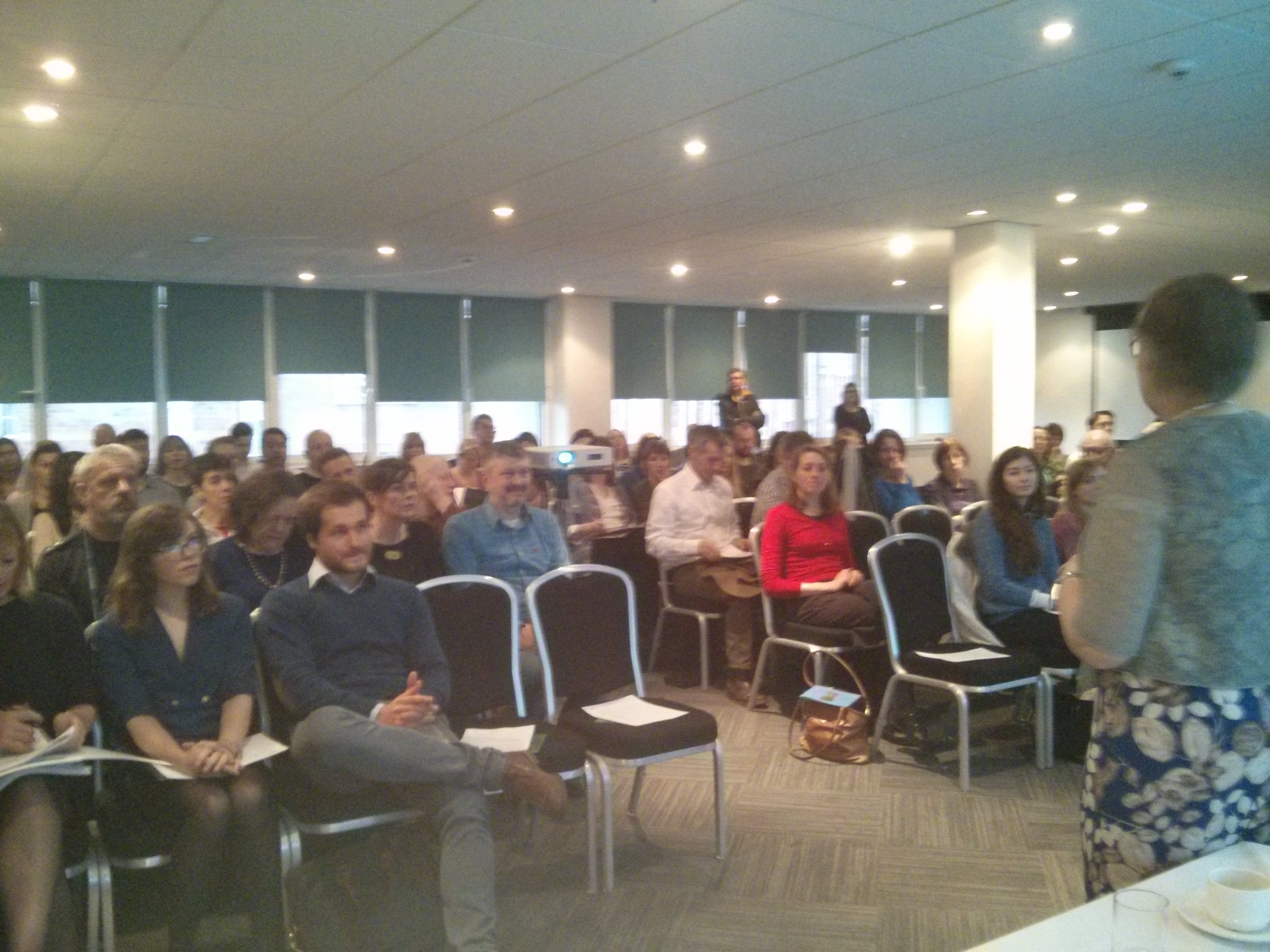
This year’s EVOC AGM & Conference took place on Tuesday 10th November at the Hibernian Stadium. The theme: “Yes We Can: Building on What works” focussed on examples of good practice, and the importance of collaboration, evaluation and keeping things local.

Our first speaker Mike Stevenson is well versed in the powers of possibility. His keynote speech highlighted the need to use language that is inclusive, creates excitement, and doesn’t make people feel powerless. He also stated that a focus on resourcefulness and not resources was needed.

Our second keynote speaker was Kara Whelan of the Craigmillar Books for Babies project. Kara outlined the success of the project – which has a successful seventeen year track record of partnership working across health visiting teams, the local library and early years settings – emphasised the need for strong, regular evaluation in order to “tell our story, strengthen the case for funding and demonstrate the difference made/learning “

After a quick tea break our delegates attend one of the following workshops, of which the relevant presentations can be accessed:

  • Welfare Reform – More change on the horizon…
  • Compact: Time for Action
  • City of Edinburgh Council Transformation Programme
  • Institute of Fundraising

 Many thanks to all who attended. The annual financial report from the AGM can be found here.


What Matters to You, Matters to Us

5 October 2015 By EVOC Communications Team Leave a Comment

Creating a Fairer ScotlandThe Scottish Government want to hear views on what a fairer Scotland should look like in 2030, and how to make this vision a reality:
“By the end of 2015 we want to have created opportunities for the widest possible range of voices to be heard”.

Throughout the Scottish Referendum, huge numbers of ordinary people engaged in politics and democracy on a scale that the UK has never witnessed.  

The turnout of 84.6% was the highest recorded for an election or referendum in the United Kingdom since Universal suffrage. 

Events took place all over – in village halls, hotels, community centres, pubs, pop up Yes shops, Royal Society of Arts offices as well as public gatherings in city and town squares.  The myriad of opportunities for everyone to engage was astonishing and reflected not only the diversity of people wanting to express their opinions and to gather information, but also the need to ensure engagement opportunities are available to all. 

Some people would not feel comfortable nor confident enough to take part in a conversation at the RSA offices, conversely some people would not feel comfortable attending a rally in a public square, therefore the diversity of venue for events was as important as the diversity of opinion, to ensure all people in Scotland could engage and be heard.

Scotland needs to harness this incredible engagement in politics and democracy, to encourage and build upon it.  Such engagement will be what will eventually create a Fairer Scotland so we need to continue to create opportunities for all people to find a way of raising their voices in a way that sits comfortably with them.

EVOC welcomes the Scottish Government’s consultation Creating a Fairer Scotland which also includes the opportunity for small local organisations to apply for funds to create their own event within their communities to contribute to the conversation. 

We are holding our own event on Friday 9th October and will be hearing about the consultation from the Scottish Government.  We are also delighted to be welcoming Robin McAlpine of the Common Weal to talk about his views on public engagement and people power.  In our discussions and workshops we will be focussing not only on what a Fairer Scotland should look like but also on how to capitalise on public engagement to achieve that vision in practical terms. 

Please do come along.  We are actively inviting you to bring two other stakeholders from your organisation, eg service users and/or trustees.  For more information and to sign up before spaces run out, click here.

Your hopes, dreams and ideas will be captured on the day and fed into the consultation in EVOC’s response.


Seeking Refuge

11 September 2015 By EVOC Communications Team Leave a Comment

Refugee Crisis

The term may may have been somewhat muddied in recent press, but a refugee is ultimately defined as:

“a person who has been forced to leave their country in order to escape war, persecution, or natural disaster.”

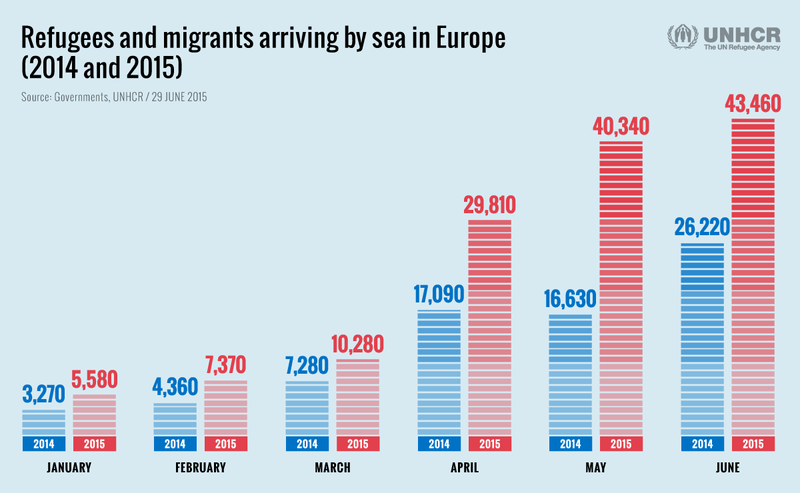
Currently, there are approximately 19 million refugees globally, with the number seeking sanctuary in Europe almost doubling since last year. A large number of the refugees are fleeing the current conflict in Syria.

These journeys are difficult and dangerous, and often in little more than inflatable rafts; meaning many have drowned in the attempt. Most recently, the graphic image of young Alan Kurdi (initially reported as Aylan Kurdi) who drowned trying to reach the Greek island of Kos with his family appears to have shocked the mainstream media into action.

The refugees that have made it to Europe are living in extreme poverty in refugee camps across Greece, Austria, Hungary, and Calais. These camps are struggling to cope with demand as more refugees arrive. Others are displaced in Turkey, Lebanon, Iraq and Jordan.

How to Help

There are a number of ways people can help. SCVO recently published a map of drop off points for donations for people living in the camps. CalAid is helping to support the Calais refugee camps, and is accepting donations at its Portobello drop off on Saturday 12th September. They are also accepting donations via their justgiving page. The Independent also has written a useful article on practical ways you can help.

There is also an ‘Edinburgh Sees Syria‘ event taking place on Saturday from 2.30pm – Midnight at the Scottish Parliament building, to show solidarity with the refugees and to call on the Scottish Government to take further action. 

*Sources: The UN Refugee Agency, Vox Media, BBC News

  • « Previous Page
  • 1
  • …
  • 9
  • 10
  • 11
  • 12
  • 13
  • …
  • 22
  • Next Page »

View Notices by Category

About EVOC

  • EVOC Staff
  • Board & Trustees
  • Edinburgh’s TSI
  • Terms of use
  • Privacy Policy
  • Vacancies

Contact Us

EVOC, 61-63 London Road, Edinburgh, EH7 6AA

Get in touch

Facebook
X (Twitter)
LinkedIn
Eventbrite

Cyber Essentials Certified
Quality Scotland Logo
Living Wage Logo
OSRC Registered Charity - SC009944

Copyright © 2026 · EVOC is a company limited by guarantee No. SC173582 and is a registered Scottish charity No. SC009944.