EVOC

Supporting the people and communities of Edinburgh since 1868.

Menu 
  • Home
  • About Us
    • Vision, purpose and values
    • Contact Us
    • Board
    • Staff
    • Membership
    • Reports and Consultation Responses
    • Vacancies
    • Edinburgh’s TSI
  • Forums & Networks
    • Carers Forum
    • Chief Officers Group (Edinburgh)
    • Children, Young People & Families Network
    • Disability Forum
    • Mental Health Forum
    • Older People’s Service Providers’ Forum
    • Place-based Networks
    • Social Enterprise Network
    • Strategic Place Forum
  • Our Work
    • Children, Young People & Families
    • Edinburgh’s Response to Ukraine
    • New Scots Edinburgh Refugee Integration Strategy
  • Funding
    • Current Funding Opportunities
    • Edinburgh Community Lottery
    • Community Benefit Gateway
    • Communities Mental Health & Wellbeing Fund
      • Communities Mental Health & Wellbeing Fund: Year 5
      • Communities Mental Health & Wellbeing Fund: Year 4
      • Communities Mental Health & Wellbeing Fund: Year 3
      • Communities Mental Health & Wellbeing Fund: Year 2
      • Communities Mental Health & Wellbeing Fund: Year 1
  • Training
    • Our Commitment to Quality Training
  • Need Help?
  • News
    • Events, Seminars, & Workshops
    • EVOC Blog
    • Our Latest E-newsletters
  • Noticeboard
You are here: Home » Archives for Blog Posts

Participatory Budgeting an Effective Tool for Community Engagement?

24 November 2017 By EVOC Communications Team Leave a Comment

Jez Hall from PB Partners lead a workshop on Participatory Budgeting at our Conference, this workshop built on the work of EVOC to:

  • raise awareness of Participatory Budgeting with the third sector
  • continually evaluate PB projects being run across Edinburgh from a third sector viewpoint in order that learning from projects can be shared with city partners

EVOC has prepared a draft PB position paper which was circulated at this workshop framing the discussion on PB.  Views and thoughts on PB were sought from the sector. Jez Hall from PB partners ran the workshop which focused on the Scottish Government’s aspirations for PB in Scotland, whilst acknowledging the issues currently being experienced by the third sector.  Michael Traille also attended the PB workshop and is a community activist who is training to be a PB champion and is involved in the Leith Links PB.  Michael was interested to hear the third sector viewpoint as generally, he works with community activists who are extremely positive about PB. 

To end the workshop participants were asked to come up with good challenging questions to ask those organising PB events if they were to believe that PB could help to solve a set of problems in Edinburgh. 

These were the responses.

What are your intended outcomes?

What are your expectations of the PB process?

How do we ensure that all those that should be included are included?

How could we contribute as a sector?

What change is possible from doing this PB?

Where is the learning process?

What limits are being set on this PB process?

These questions have further informed EVOC’s position on PB and a final position paper will be circulated in the coming months. 

Partnership Working with School Communities

24 November 2017 By EVOC Communications Team Leave a Comment

At our Conference, Paula Swanston and Lyn Williams from Home Link Family Support presented about systemic change within a school community, drawing on their experience from a pilot project with Lawfield Primary School in Midlothian. This project was a partnership between Play Therapy Base, Home Link Family Support, Children 1st, Midlothian Sure Start and Midlothian Council. The partnership provided a variety of interventions to tackle challenges with pupil attendance, violent incidents, staff support and parental engagement with the school.

Paula and Lyn discussed in detail how this innovative partnership was set up, in particular how the school was encouraged to see the wider issues within their community which impacted on a pupil’s ability to learn. A whole shift in culture was needed within the school, which took time, expertise and flexibility from all partners. The result of this pilot was a reduction in absconding, exclusions and lates, an increase in reading attainment and parental engagement, and a single referral pathway for supporting pupils within the school.

In addition to the presentation, attendees to the seminar were able to be involved in playing the roles of different partners within a wellbeing meeting, normally chaired by the head teacher within the school. This provided attendees with a brilliant opportunity to reflect upon professional perspectives, whilst also discussing how parents would be involved in these deliberations.

Overall, this seminar provided an excellent opportunity to hear about a highly successful partnership between the voluntary sector and education, the challenges which arise during this situation, and the impact this can have upon both a child’s wellbeing and their attainment while they are in school.

Participatory Budgeting in Edinburgh: Where are we now?

13 November 2017 By EVOC Communications Team Leave a Comment

Everyone is talking about Participatory Budgeting again, well that is how it feels in my world as I get invited to attend meetings to look at and discuss PB ……  So here is my run through of what is happening nationally and locally:

  • The national PB conference funded by the Scottish Government is being held on the 14th November and is a sell-out.
  • And last Friday there was an announcement from the Scottish Government that the Council leaders have agreed that at least 1% of local government budgets will be subject to participatory budgeting by the end of 2021.
  • The list of organisations that received the Scottish Government Community Choices funding was recently announced and in Edinburgh £44k went to City of Edinburgh Council, £82,800 went to Leith Links Community Council and £23,750 went to the Broomhouse Centre. Just about £150k to support the adoption of the PB process in the City.
  • City of Edinburgh Council PB Champions project, looking to upskill public sector and third sector staff in PB project development. (before March 2018)
  • PB projects which are planned in the coming 6 months:
    • Choose Youth Work 2018-2019 Grants Programme (Nov – Dec)
    • Leith Chooses (Leith Links Community Council and Leith Neighbourhood Partnership joint project) (estimated Feb/March)
    • Portobello and Craigmillar Neighbourhood Partnership (estimated Feb)
    • Neighbourhood Environment Funding – City Centre (before March 2018)
    • Broomhouse Neighbourhood Centre (before March 2018)

At EVOC we have heard good and bad about PB, you can read the report from our thinkSpace here, we commend the drive to improve local democracy and see PB as an effective community engagement tool, however making sure that this PB is done well is vital for the third sector organisations taking part.  Learning from past PB projects is necessary particularly as we see larger parts of the council budgets being allocated in this way.  The devil is in the detail in the coordination and operation of PB events and giving adequate time and thought to the design is vital, this is best done with a steering group that has all stakeholders on board including local voluntary organisations. 

For anyone asked to take part in a steering group we would suggest that they make sure they have read the Values Principles and Standards for Participatory Budgeting and National Standards for Community Engagement.   

The more I read about and work with PB projects the more I realise that what seems very simple needs a lot of careful thought and deliberation to create something worthwhile which really drives local democracy.

Do Funding Streams Pigeonhole Services?

22 September 2017 By EVOC Comms Leave a Comment

There is a great deal of effort going into involving people in shaping their services these days. And rightly so. The Christie report (among others) makes a strong case for how this will improve outcomes for everyone and make sure money is spent more wisely, especially while there is less of it to go round.

It isn’t always easy in practice and in my experience even the best of intentions can lead to plenty of engagement but not always meaningful involvement in decision-making and service shaping. It’s a journey and one worth sticking at.

So surely we should be grateful when a community, understanding their own needs, helps to slowly and organically grow and shape a service to develop in response to these needs? 

One such example is Saheliya, a specialist mental health and well-being support organisation for black, minority ethnic, asylum seeker and refugee women and girls (12+) in the Edinburgh and Glasgow areas.

Saheliya was established in 1992 by and for BME women in response to research carried out by Craigentinny Health Centre which showed that BME women were not accessing health services, especially mental health services. Since then Saheliya has grown and evolved to meet the needs of marginalised BME women unable to access mainstream services, almost 100% of whom are affected by some kind of gender-based abuse. Saheliya is excellent at identifying problems ranging from trafficking to forced marriage to racist attacks among women who didn’t know that such abuses are a crime and that help exists to support them and keep them safe. Because of their position in the community they have often been the first to bring serious issues to light (such as trafficking) long before they were on the public radar.  

Saheliya’s wrap-around services keep women and their children safe and enable them to rebuild their lives. One of the reasons for the breadth of service is the emphasis on language and awareness of the effects of trauma. Saheliya’s staff collectively speak 34 languages, including Arabic, Bengali, Cantonese, Hakka, Hindi, Mandarin, Punjabi and Urdu.  Language is one of the key barriers for women from minority ethnic communities in accessing (and benefiting from) mainstream services – interpreting is much more expensive, often inappropriate, inadequate, or just plain absent. Over 400 vulnerable women supported to rebuild their lives in Edinburgh each year shows that the Saheliya approach works.

Yet somehow this broad approach, which many see as Saheliya’s strength is also proving to be an impediment. The organisation now finds themselves in a difficult position in Edinburgh, having lost a portion of funding through a process of service redesign where among other things their approach was found not to sufficiently fit the domestic abuse model. Now another large portion of funding is under review – with concerns about where the service fits because it is so broad it crosses the boundaries between domestic abuse and mental health and wellbeing – different statutory funding streams.

I should be clear – so far the Council seem to be taking this risk seriously and are undertaking a comprehensive review of the service, the outcomes it offers and where it fits. But there is something seriously wrong with a system if an organisation specifically established to meet the needs of those struggling to access mainstream services are themselves struggling to access mainstream funding. Services like Saheliya can end up swimming against the tide in so many ways and you can’t help feeling that women and children at risk will end up losing out.

We need services which first and foremost meet the needs of communities and individuals, not provide services dictated by the rigidity of statutory funding streams. The main role of the various funding streams is to facilitate the best outcomes for people and so we need to work together to make sure they help, and not hinder, the process. We all say we want to know how to support ‘hard to reach’ people but perhaps we need to learn how to value it when it happens.  

This blog has been written with Saheliya’s full knowledge so that we can use this case study to raise a far broader equalities issue. EVOC is interested to hear from other organisations if you have experienced anything similar. You can do so by contacting Maria: [email protected] 

Tagged With: BME, community, Domestic Abuse, Funding, Mental Health, Saheliya, Women and Children

Getting Ready For GDPR

30 August 2017 By EVOC Communications Team Leave a Comment

There is a lot of chatter out there at the moment about GDPR, as well as a rapidly expanding portfolio of training events, some of which come with eye-watering price tags. You should not underestimate the importance of GDPR and the processes you will need to implement to become compliant by May 2018. However, before you rush out and spend all of your training budget, it is worthwhile going through the current advice and information from the Information Commissioner’s Office, and use the tools that have been made available to assess your organisational readiness. It is also worthwhile noting that there are a number of organisations out there who are or will be providing free or low-cost training to Third Sector organisations, and that guidance on some parts of the Regulation are still to be published. 

I have (having to get to grips with it myself) laid out the basics of where to find information, and what is important. 

What is GDPR?

GDPR = General Data Protection Regulation

The GDPR is replacing the UK’s 1998 Data Protection Act. It applies to all EU countries, and will still apply to the UK after we leave. 

When is it coming?

It comes into force on the 25th May 2018

This is not the start date for getting your house in order, but actually when your house needs to be in order. This is the ultimate of spring cleans.

Does it affect me?

If you hold or process information on employees, clients, donors, and suppliers then you will have to ensure you are compliant with the new regulations. So, most likely, yes. 

What happens if I don’t comply?

There are penalties for non-compliance which can vary in severity, so it is in your best interests to ensure you are compliant. What is new about the GDPR is the Accountability Act is that it requires you to demonstrate the technical and organisational measures you have put in place to become compliant. 

Information on how to evidence compliance can be found  here

If you have a question or are worried about your level of compliance at any stage you can also call the ICO helpline. 

Who Should Be Involved

A Data Protection Officer: It is highly recommended that you appoint a Data Protection Officer (which can be an existing member of staff), and depending on the data you hold and process the appointment of a Data Protection Officer is mandatory. 

There is guidance available (about halfway down the page) about the role of the DPO and when one should be appointed here. 

Trustees: This should be on the Trustees agenda to ensure they are doing what it takes for the organisation to become compliant and that they understand the implications of non-compliance and how the GDPR may impact the organisation operationally. 

Everyone: Staff and volunteers are responsible for ensuring they follow the regulation and best practice for holding and processing data. 

What’s the difference between GDPR and the Data Protection Act?

You can read about the key areas of focus and changes to Individual Rights on the ICO’s website 

One of the biggest updates to the regulation that will affect charities is around consent:

“Consent under the GDPR must be a freely given, specific, informed and unambiguous indication of the individual’s wishes. There must be some form of clear affirmative action – or in other words, a positive opt-in – consent cannot be inferred from silence, pre-ticked boxes or inactivity.”

This is particularly important for marketers and fundraisers to be aware of, and guidelines on this, as well as other areas of the regulation, will be published in or before December 2017. The Institute of Fundraising has also written specifically to this point and you can find out more here and on the link below. 

What’s Next?

The ICO (Information Commissioner’s Office) has produced a handy document to help you prepare for GDPR’s arrival called 12 Steps to Take Now

You can conduct a GDPR organisational health check here.

The Institute of Fundraising has produced a guide for fundraising organisations which you can download here. 

Accessing Adulthood Transitions thinkSpace – A Personal Perspective

21 August 2017 By EVOC Communications Team Leave a Comment

The period of transition is one that is daunting for any individual, but especially if a young person has additional support needs.

As a young person with a physical disability, I found the process of transition a very challenging process, and I didn’t know what my future would hold. The transition thinkSpace brought about many issues concerning both families and professionals, such as accessing services, available support, and employment opportunities for people with additional support needs. This included how people with disabilities can access the world of employment, as well as receive a sufficient amount of support to access college or other activities.  When a young person turns 18, a whole “process” begins of them receiving adult services.  According to The Scottish Transitions Forum, this process needs to start a lot earlier in order to prepare a young person in transition.

Before that stage, it is important for young people to feel that they are fully included in their peer group. The discussions looked at the idea of inclusion and if different services or educational opportunities were available. From experience, the lack of resources and support available can lead to people struggling to find opportunities to access further education or employment. College courses seem to be a good stepping-stone for people to broaden their skills, learn about interesting subjects and gain qualifications. Saying that there may still be a number of people who can’t access further education. When support exists, people can support individuals to achieve the things they want to achieve, but access needs to be consistent. This is very important to me, as having Self-directed Support enabled me to attend college and university, and life would be very different now if I did not have these opportunities.

The concept of being in transition for people with disabilities is a challenging one. The planning should start around two years in advance of the transition, in order for the transition to go smoothly. By using person-centred approaches, individuals can map out the way that they want their lives to be like, and what support they need to achieve this. Having used Person-centred Planning (PCP) myself, I know the incredible value that can come from spending a few hours creating an exciting plan for the future based on your own decisions. Personally, I feel there is a lot of emphasis on paperwork and making sure the correct boxes are ticked, which can be a long drawn out process that focuses on specific support needs and how much that would cost, rather than looking at the individual and what their goals and aspirations are.

On the issue surrounding employment, and how hard it is for people with disabilities, there are some existing organisations, such as Into Work, that are doing work to help people to find information about employment opportunities. This may help remove the stigma of people with disabilities not being able to find a meaningful job, and encourage people to find employment. The idea of people being given the opportunity to gain skills to equip them for employment is crucial. Some people may feel abandoned after school as no-one encourages them to explore their options, which may leave them stuck after school not knowing what to do, and these organisations should be helping them.

During the thinkSpace we heard a young person, Alexander Warren, speak about his journey through the transition process, from being isolated by attending a special school for people with disabilities, to living a full and independent life. The concept of Person-centred Planning seemed to be a life-changing tool for him as he could dream and achieve. Personally, I found this a great tool too as I could quickly show new professionals exactly what I wanted to achieve, and how they could assist. Alexander was able to socialize and go travelling, and he went on to attend acting school. He now runs his own company where he travels around helping people to discover their own dreams. I think it is important for professionals to hear these stories, as it reminds them what impact their work has on people who use services, and that it is extremely worthwhile.

This was followed by Scott Richardson-Read from The Scottish Transitions Forum who spoke about the Principles of Good Transitions 3. This examines the way in which young people in transition can become trapped within the transition system without always knowing what is going on. I feel communication is the key to a positive and smooth transition. People may be excited to move on into a new situation, and if done correctly, the move can be a great improvement in the young person’s life, however, this isn’t always the case. Having principles can help professionals ensure they cover all the key parts of a young person’s life. This is very important as from experience transitions are a scary process, and people may get caught up in not knowing what is going to happen.

Overall, the event was very insightful, as it had been quite a while since my own transition, but the same questions arose, and families still have some questions which people may not be able to answer. I really recognise the benefits of having plans as I have been through many transitions and I understand the frustrations and struggles, as well as the success.

The best piece of advice I would give as a young adult with a disability is never to lose sight of what you want to achieve because you can achieve it, and you will feel great when you do.

Localities: Empowering our Communities? By Dave Pickering

8 August 2017 By EVOC Communications Team Leave a Comment

I recently attended Empowering our Communities, an event organised by the Scottish Government’s Ingage team.

The event was billed as ‘a pop-up day of advice, inspiration and connections’.  Like many of the delegates present, I’ve attended quite a few of these ‘inspirational’ events over the years, only to later be deflated by the grinding reality of funding cuts, tokenistic consultations and partnerships that are really partnerships in name only.

Community planning systems and structures come and go, but one key element crucial to making it work is so often the thing that’s missing: the community!  There are reasons to be optimistic that the new Localities being introduced across the city could see this change, however.

Recent legislation like the Christie Commission and the Community Empowerment Act has given communities substantial new powers. Statutory agencies are now obliged to work with communities to produce community plans that have communities at their heart. And with an emphasis on genuine partnership working, we should see an end to top-down community planning, with councils and other statutory services doing things with communities and not to them.

And given austerity and funding cuts in statutory services over recent times, there’s an acceptance that councils and statutory agencies simply can’t deliver services in the way they have in the past. There is a realisation that there really has to be a new way of working.

Some local authorities have readily addressed these changing circumstances, and one of the highlights of the Empowering our Communities event was the premiere of Rocky Road, a short film made by Media Co-op.

Rocky Road tells the story of a ‘switched-on’ Council – East Ayrshire – working alongside community activists, supporting them to help save their local community centre.  Without wishing to spoil the ending (!) the film illustrates just what can be achieved through trust and by genuine partnership working.

The film had a particular resonance for me as community centres in my own neck of the woods are currently going through challenging times as a consequence of the city council’s ‘transformation’ programme. They face uncertain futures as the number of front line Community Learning and Development staff has been slashed, with no indication yet of how centres which provide vital community services are to be managed and run in the future. The film, at least, had a happy ending – it remains to be seen if our local community centres will, too.

The film demonstrated that with enlightened thinking things can change, but there needs to be a will to bring about that change.  That will is certainly there in the third sector, where partnership working has been the norm for as long as I can remember. But this time, there are encouraging signs that the will to work together is also there within the statutory public services – they are certainly talking a good game.

Talk is cheap, of course, and ultimately we must judge our partners not on what they say, but on what they do.  Localities are in their infancy, but if communities are engaged from the outset maybe this time we can get community planning right.  After all, no-one deliberately sets out to deliver poor public services, so it’s in all our interests to make this work.  And wouldn’t we all love a story with a happy ending?

 The film can be found at

https://www.facebook.com/themediacoop/videos/1174208912683599/

Dave Pickering, Community Action North (CAN)

Chair, Forth & Inverleith Voluntary Sector Forum


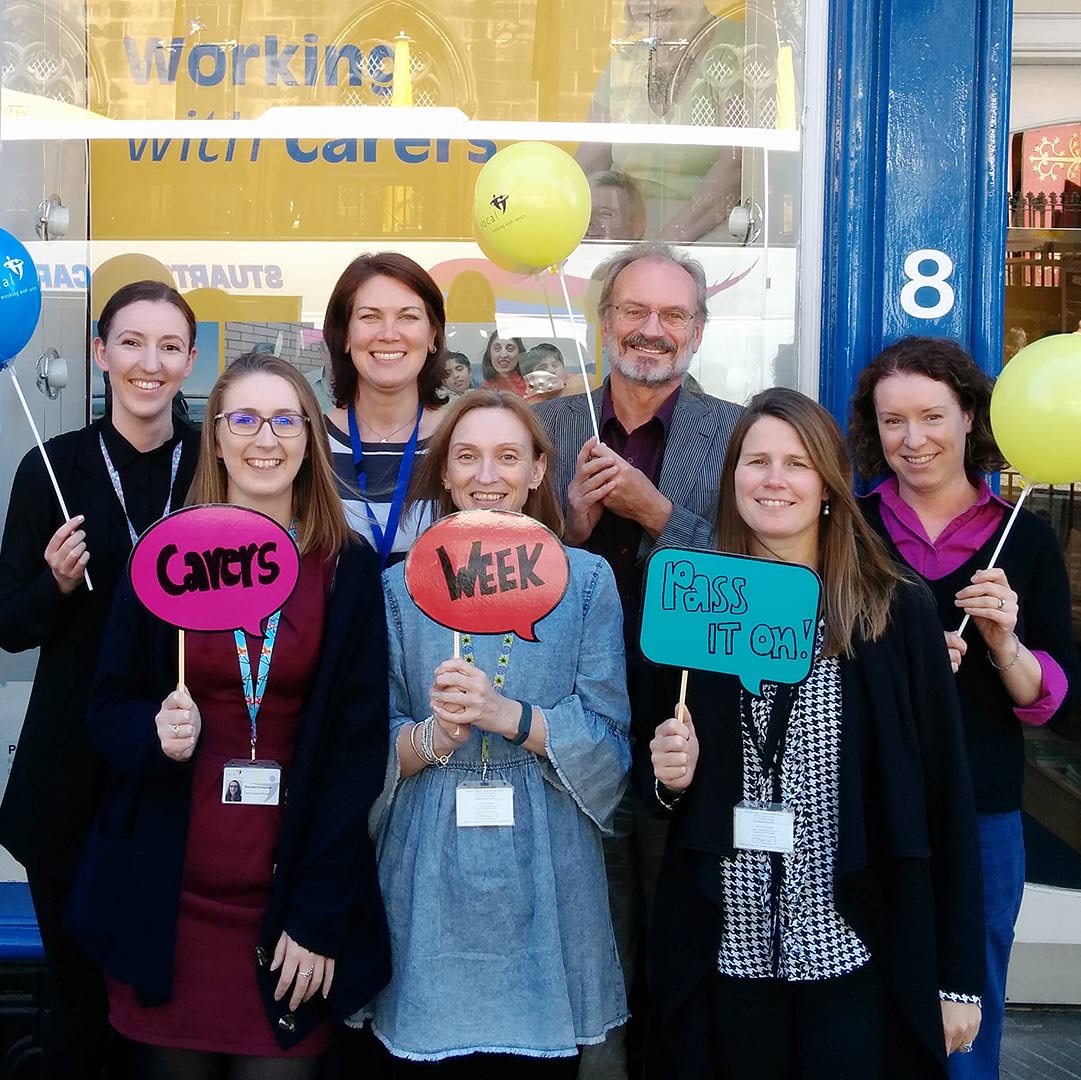
Let’s Get VOCAL this Carers Week

13 June 2017 By EVOC Communications Team Leave a Comment

Carers Week

We spoke to Sebastian Fischer, Chief Executive of Vocal, about how he became involved with the organisation and how you can support the work of carers this week and beyond. 

How long have you been CEO of Vocal, and how did you get there?

In 1993, family carers established VOCAL as the Voice of Carers Across Lothian. I was appointed in 1994 as their first employee. Today VOCAL supports over 8,000 carers in Edinburgh and Midlothian with 35 staff and some 70 volunteers.

Back in 1994 VOCAL was created to serve carers across Lothian Regional Council (LRC) area. But we started straight away to build strong carer organisations in East, West and Midlothian, knowing that LRC would split into four local authorities in 1996.

What are your hopes and fears for the implementation of the new Carers Act?

The Carers (Scotland) Act 2016 was the result of a 5-year concerted campaign by national and local carer groups. It had the fitting strapline “from recognition to rights.” 

By 2008, the contribution unpaid carers make to society was already well recognised, but not underpinned by any statutory rights to support. Unlike the paid workforce, unpaid carers had no entitlements to support in their role, to training, breaks from caring or holidays, pension entitlements or emotional support.

We knew then, that demand on family members to care more intensively would increase steeply for years to come. The Carers Act was a response to carers’ campaigning, but sadly, it has few tangible rights enshrined in the Act. Other than getting a carer support plan instead of just being assessed, it still contains no rights to advocacy, minimum entitlements to breaks from caring, to emotional support or counselling, or rights to other supports.

One excellent success of carers’ campaigning has, however, been the increase of Carers Allowance from the lowest of all benefits to the level of Jobseekers’ Allowance, from summer 2018.

A further opportunity for improved carer support is through local authorities, who are required to develop local eligibility criteria for support. Edinburgh has led the process and already produced draft criteria. Nationally, carer organisations are involved in the development of many different pieces on guidance for the implementation of the Act from April 2018.

What is the most common misconception about being a carer?

Possibly, that many carers think they have to be ‘on a register’ or receiving carers allowance to be recognised as a carer.

We consider every person a carer who provides unpaid care to a family member, partner, relative or friend of any age who needs help to manage a long term condition, disability, physical or mental health problem or addiction.

In Edinburgh, anyone is considered a carer who supports another person from the earliest point and often prior to diagnosis – whether supported at a shared home, the person’s own home, or in a residential or hospital setting.

Is there a specific carer’s story that stands out for you?

As a principle, VOCAL does not ‘nominate’ individual carer for ‘standing out’ or put them forward nominated for an award. The impact of the caring role is unique on each person, although there are many common strands.

We therefore emphasise caring situations and trends which stand out – they often affect marginalised groups most affected by inequalities and lack of support:

  • people from different cultural backgrounds who struggle to understand and access our services due to lack of cultural sensitivity and translations services
  • people with multiple caring responsibilities, thousands of carers care for more than one person but are not recognised as needing additional support
  • parent carers, who are often expected to cope as parents, despite additional complex demands on them and their families
  • people required to care round the clock due to the intensity of support required

What can the public do during Carers Week to help support carers in Edinburgh?

Household and health surveys estimate there are some 47,000 carers in Edinburgh alone. Help us identify carers and encourage them to contact VOCAL – employers, neighbours, families and friends have a big role to play so carers access information and support early to prevent critical situations later!

Visit VOCAL’s website – www.vocal.org.uk – and social media sites. We are using the hashtags #CarersWeek and #PassItOn on both Facebook and Twitter asking people to share and pass the posts on to people who may not yet know about the support available to carers.

Finally, help us to ensure that every week is carers week – carers deserve support all year round!


Volunteering In Edinburgh

7 June 2017 By EVOC Communications Team 1 Comment

Volunteering is a great way to offer personal skills and abilities to a variety of organisations, to work in areas you’re interested in and with people you want to work with.

In current society, there is so much pressure to find a job, make an income and pay the bills. There is increasing demand for people to find a suitable and financially sustainable job, which is very difficult to find. Volunteering can help people to find roles which they enjoy doing, gives them personal fulfilment and enables them to contribute to their community.

When I was preparing to graduate, I started seeing an advisor at IntoWork. The idea behind IntoWork is to help people with disabilities look at their skills and find suitable employment, as well as volunteering roles. From my own experience and from other’s I know accessing employment, even through IntoWork, can be highly challenging. I applied for both volunteering roles, and paid employment, and got a voluntary peer support role with Lothian Centre for Inclusive Living.

This was an excellent starting point, as I was able to use my experience as well as the models of disability, which was the framework for my dissertation. We had four very in-depth training sessions about how to give valuable advice and support to people who had a similar experience to us. There were also support groups and workshops, which were great to attend, to learn more about the organisation and get to know the people who use their services. The support groups are ongoing which is a refreshing way to be involved with LCIL. They also put on linked peer-support groups where a group of people spent a number of months looking at “becoming unstuck” which covered ways in which the system was fixed in a way which caused difficulties for people with disabilities, and to share ideas about techniques to approaching challenges in the system. This was a great way to get to know people and share our experiences with others.

After looking at a few other opportunities, IntoWork decided to close my case as they told me I was doing really well, however, I was only really doing a little bit of work with LCIL – which was great, but I still felt I had a lot to give. At one of the LCIL sessions, someone mentioned that Volunteer Edinburgh had a service where people could advertise what they had to offer, to a various number of organisations. I went into the drop-in and spoke to someone about advertising my experience, and created my own advert. I stated that I was one of the first people to take on a self-directed support budget, and I was hoping to help other people on their journey on accessing the support they need to achieve their goals. After a few weeks, I had around six different organisations contacting me, who had seen my advert and were keen for me to become involved with their organisation. I had to work out which organisations were worthwhile investing my time in. I had a meeting with the organisations and from there I started to volunteer with Children’s Inc., Crossing Countries, Beyond Boundaries and Edinburgh Voluntary Organisations’ Council. This was a great approach to volunteering as I felt reassured that these organisations were already keen to work with me, before they even knew who I was. This seemed to be a much more relaxed approach to entering the world of work, and even though it is classed as volunteering and not paid employment, it is a very effective way to find different opportunities.  Having created the advert myself, I was stepping out and introducing myself to Edinburgh, by saying this is what I have to offer, and I want to make a difference. 

The work I am involved in at Children’s Inc is around encouraging and giving advice to families who are trying to access services, but might struggle to have enough support to be able to get the right information to have positive outcomes for the child. There is a need for parents to be supported when they need it. There is an opportunity for families and organisations to meet and talk about different sources of a successful activity for a child either with disabilities, or support with looking into self-directed support etc. This is a vital source of information for families to have, as they may not know where to go to find that information. I also helped to organise an Easter event for children and families. This event was great for families and service providers to come together and learn from different organisations. This was a huge success as around 30 children and their families attended. Here I shared my experience of the transition process through showing families the way in which using person centred planning was the key element for helping people through the process. By using person-centred plans people can map out their vision and work out what support they have. This useful tool to show parents and professionals can have conversations about the support their children have and can receive.

I love the rewarding feeling I get when I volunteer. There is something special about using your own experiences to try to help other people, which should not be down to paid professionals. Being a volunteer can teach you a vast amount of skills about how organisations work. There are hundreds of volunteering opportunities within Edinburgh, which people can apply to. This ranges from working in a charity shop to supporting someone to live an independent and fulfilling life. Volunteering enables people to use their skills effectively to help other people achieve some kind of work. I think there is a certain amount of stigma around volunteering, especially around people with disabilities, however, it is a good way to get involved in organisations and it could lead to employment.


More about Ashleigh

I grew up on a farm in Dumfries and Galloway with Mum, Dad and younger sister Helen. After leaving school in 2010, the pilot project for self-directed support was just starting. At this point, I was lead to believe that I was only entitled to critical need. This meant I could not attend college, or live my life the way I wanted. I was part of a self-advocate group where I found out about self-directed support and met Joe Gough from the Council who was my guide through the whole process of employing a P.A to accompany me to my local college.  This worked out really well, and I used an agency for social hours. After two years studying higher care,  sociology and psychology at my local college I wanted to further my education so I applied for an HNC in social sciences, and then onto university.

I studied Psychology and Sociology at Queen Margaret University, which helped me develop a passion for understanding people and the way society influences them. I really enjoyed university, from studying interesting parts of social interaction to being involved in very exciting missions weeks with the Christian Union. Within my degree, I focused on disability issues within my studies. This included European Social Policy where I examined self-directed support in both Scotland and England, and my dissertation was around students with disabilities and their experience of university. These topics are very close to my heart as without self-directed support I would not be able to attend university.  


Ashleigh volunteers with EVOC one day a week and has been working with our team to assess how effectively Self-Directed Support is being delivered in Edinburgh.

You can find out more about volunteering by visiting www.volunteeredinburgh.org.uk


Lifeline No Longer

6 June 2017 By EVOC Communications Team Leave a Comment

-By Maria Arnold

The recent demise of Lifeline is a sad thing, and above all I hope that people who had been receiving their services across the UK do not suffer too much disruption as a result.

EVOC were involved in some of the debate around the decision to award three big contracts to Lifeline in November 2015. The discussion was never specific to Lifeline but rather to the process, one which seemed to place more emphasis on some kinds of risk than others. A decision to competitively tender these services was predicted in advance to disadvantage the three local grassroots providers and indeed it did, they all lost the contract. The process as a whole represented to many people the growing dominance of large charities and the failure to value local links and knowledge, despite moves towards coproduction and locality working.

Competitive tender is touted by many as a science: robust and fair and objective. We are told it is the only way to deliver best value. Critics see the methodology as going too far in a mission to be objective, boiling down such human and nuanced services into neat objective blocks to fit into a matrix, ultimately failing to value the most important things. The ability to write a good essay does not necessarily correlate with the ability to provide the most appropriate and responsive services for vulnerable people. An example is a recent decision to remove part of a tender process which would allow the bidders to talk through the way they would deal with service user scenarios. The reason? It was too subjective and would risk legal challenge.

The collapse of Lifeline seems to reflect mismanagement high up in the charity, and there is no implication that their services in Edinburgh were not well delivered. Yet despite becoming insolvent in March 2017, Lifeline were successful in being awarded a new contract in West Lothian in April, for Assertive Outreach and Criminal Justice Services. How an organisation on the verge of collapse could present itself on paper as the best candidate for the job is bewildering, and does undermine the validity of such a process. If a slick bid can conceal this, what else can be hidden with a carefully constructed essay?

It also undermines the common assumption that big organisations and big contracts are somehow more dependable. Indeed the Edinburgh Alcohol and Drug Partnership initially committed to only awarding a maximum of two of the four contracts to the same organisation, exactly to mitigate the risk of something like this happening. When it came to it, the decision was taken to award three of the four to Lifeline and now we are paying the price.

Given the timescales involved, there was very little choice about CGL taking over Lifeline’s services. It seemed the only viable option to minimise disruption to service users. But they are an unknown quantity in Edinburgh and the transition must therefore present risks.

EVOC and our partners are in constructive conversations with the City of Edinburgh Council and Scottish Government about procurement, and how it can be as flexible and nuanced as it needs to be to deliver the best services for people at the same time as being fair open and transparent. In the COMPACT Voice survey this year procurement was listed as one of the main things organisations need support with.

The end of Lifeline adds fuel to the fire. For me it indicates that in the careful balancing of risks involved in deciding who is best placed to deliver services in Edinburgh we need to be prepared to adjust some of our assumptions quite radically. 

Tagged With: Coproduction, Lifeline, Procurement, tender

  • « Previous Page
  • 1
  • …
  • 7
  • 8
  • 9
  • 10
  • 11
  • …
  • 22
  • Next Page »

View Notices by Category

About EVOC

  • EVOC Staff
  • Board & Trustees
  • Edinburgh’s TSI
  • Terms of use
  • Privacy Policy
  • Vacancies

Contact Us

EVOC, 61-63 London Road, Edinburgh, EH7 6AA

Get in touch

Facebook
X (Twitter)
LinkedIn
Eventbrite

Cyber Essentials Certified
Quality Scotland Logo
Living Wage Logo
OSRC Registered Charity - SC009944

Copyright © 2026 · EVOC is a company limited by guarantee No. SC173582 and is a registered Scottish charity No. SC009944.