EVOC

Supporting the people and communities of Edinburgh since 1868.

Menu 
  • Home
  • About Us
    • Vision, purpose and values
    • Contact Us
    • Board
    • Staff
    • Membership
    • Reports and Consultation Responses
    • Vacancies
    • Edinburgh’s TSI
  • Forums & Networks
    • Carers Forum
    • Chief Officers Group (Edinburgh)
    • Children, Young People & Families Network
    • Disability Forum
    • Mental Health Forum
    • Older People’s Service Providers’ Forum
    • Place-based Networks
    • Social Enterprise Network
    • Strategic Place Forum
  • Our Work
    • Children, Young People & Families
    • Edinburgh’s Response to Ukraine
    • New Scots Edinburgh Refugee Integration Strategy
  • Funding
    • Current Funding Opportunities
    • Edinburgh Community Lottery
    • Community Benefit Gateway
    • Communities Mental Health & Wellbeing Fund
      • Communities Mental Health & Wellbeing Fund: Year 5
      • Communities Mental Health & Wellbeing Fund: Year 4
      • Communities Mental Health & Wellbeing Fund: Year 3
      • Communities Mental Health & Wellbeing Fund: Year 2
      • Communities Mental Health & Wellbeing Fund: Year 1
  • Training
    • Our Commitment to Quality Training
  • Need Help?
  • News
    • Events, Seminars, & Workshops
    • EVOC Blog
    • Our Latest E-newsletters
  • Noticeboard
You are here: Home » Archives for Blog Posts

Voluntary Sector Forums Survey

24 November 2014 By EVOC Communications Team Leave a Comment

Voluntary Sector Forums and Networks are held across Edinburgh. These Forums offer vital support to Neighbourhood Partnership structure, by facilitating communication and planning among the voluntary sector organisations that operate within each local area. They are often seen as a route into the local Community Planning structures

EVOC works directly with these Voluntary Sector Forums, and we are trying to collate as many opinions as possible to try to identify what the strengths of the Forums are, how we can build on these strengths, and acknowledge and identify where improvements can be achieved. 

We have, as a result, compiled & published a questionnaire regarding the local Voluntary Sector Forums which asks questions of your organisation’s involvement with, and your experience of, participating in the Forum within your area.

A discussion paper will then be produced highlighting the results and looking at a way forward to ensuring everyone, who wants to, can engage fully and effectively with both Voluntary Sector Forums and also Neighbourhood Partnerships.  This piece of work will also compliment and feed into the Neighbourhood Partnership Review. 

All organisations responding to this questionnaire will be kept fully informed of the findings, and shall have the opportunity to consult on the draft discussion paper, with a view to creating an Action Plan which all interested parties shall contribute to.

We also hope to highlight best practice and some of the successes achieved by all organisations working together.

Your help would be welcomed and appreciated.

Complete the survey.

Did you catch a unicorn?

19 November 2014 By EVOC Communications Team Leave a Comment

Did you catch a Unicorn?Well over 120 of us thought spending a morning chasing Unicorns was well worth the time and effort!
Thank you to everyone who brought their imagination, expertise and enthusiasm for doing things differently. Lorna, Joe and Jan-Bert definitely made us think – challenging us to value what we already do and to have the confidence in our skills and knowledge to be brave and continue to do things differently working with people.

As I said, I didn’t sign up to do as I was told, I signed up to make a difference and to remember that people truly are experts in their own lives so by working with people we can make the changes we spend so much time talking about. 

I was at a meeting yesterday and several people were reflecting on the tone of change and optimism which didn’t underestimate the problems and challenges we face over the next few years.

The discussion and feedback will shape our forward strategy and has given us clear indicators of the important issues which we must address over the coming months.

A particular thanks to the staff at EVOC who really did work hard to make this event run so smoothly.

So my hope that we would remember more than the sandwiches has been realised!

You can view the presentation’s given at the AGM on this news article.

Essential info – Personal Banking

12 November 2014 By EVOC Communications Team Leave a Comment

sam 2

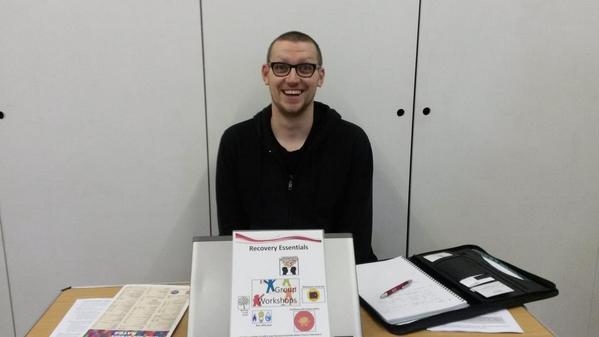
A Blog from the Recovery Essentials Team

I worked in retail banking for over a year, and in this time got to know a lot about the inner workings of the banking system. I also gained an insight into how to fix things when they do, invariably, go wrong. I found that a lot of issues were simply due to miscommunication and misunderstandings between bank staff and customers. 

I started this role with client finances on the forefront of my mind, and so far this has proven to be a good start! Banking is at times a confusing environment with varying interest rates and charges and varying degrees of financial commitments.  Understanding the money coming in and managing outgoings will be particularly important for many of our clients when Universal Credit is rolled out in Edinburgh with its emphasis on monthly payments of benefits.

From my experience in the banking world I have compiled a list of some hints and tips on how to handle your relationship with your bank. Hopefully they can help people understand some of the more complex parts of personal banking that they may never have really thought about before.

I have put together Essential Knowledge: A Personal Banking Guide, which includes a quick breakdown of the most common statement references to make understanding monthly bank statements that much easier. 

Download the Essential Info – Personal Banking leaflet.

Case Study:

Client presented with a Bank of Scotland Current account with an overdraft of about £630. Per month client was being charge £1 per day for the use of his overdraft.  Client was in receipt of benefits and every month was charged on average £30 for the use of his current account and overdraft – the account also provided various insurances (none of which were utilised by the client ). I knew there were other options available. There is a new current account that instead of charging £1 per day charged a flat rate percentage charge for borrowing limits. The new charge was calculated with an interest rate of 1.53% per month on the overdrawn balance amount as well as a £6 per month flat fee for the use of the overdraft. As my client only had an overdraft amount of approximately £630 this meant that with this new account my client could make a big saving each month.  1.53% of £630 = £9.63 + £6 monthly fee equals a total monthly charge of £15.63 saving the customer £14.37 per month.


Where have all the Unicorns gone?

5 November 2014 By EVOC Communications Team Leave a Comment

I am an ambitious and proud woman. I work in a Sector which has never rested on its laurels and is full of proud ambitious people. Proud of what we have achieved, and ambitious for change and further improvement.

My first encounter with real change driven by communities was at the ripe old age of 20, when I lived and worked in Leith. The local community were not content with the standard of the housing or the wider environment. With help from local community workers (funded for 4 years – with no prospect of extending it), a Residents Association grew into a Housing Association – helping to improve houses & build new ones, as well as improve the back greens; all done by the people themselves. This further tackled the issues of older people’s isolation and young people who felt they didn’t belong or have anything to do. You know when something just isn’t right; you know when you need to do something to make the changes; you know when you are unstoppable. It’s a heady experience.

When we look around today at our City, we know what isn’t right; we know what isn’t working; we know what needs to change. So what are we going to do about it? Seriously, are we going to say “a big boy did it and ran away”?  Are we going to say “too much, too many, can’t cope”? Are we going to say “it’s not my responsibility”?

As I see it, we have two options – scream about all the things that are wrong but don’t actually do anything about it – or work together to make a difference and show that injustice can and will be addressed in our City. In my view, the easy option is to do the screaming – but what that also does is make it someone else’s problem. The Sector I know, love and am immensely proud of has never taken the easy option.

So, finally, I get round to it – Chasing Unicorns. It takes courage to change how things have always been. The stark reality facing us is either be part of the solution, or part of the problem. We need to stop defining ourselves in the terms of other people and organisation’s priorities. It is our responsibility to look to our communities and our people, and start to make those changes.

If you go away from our conference on Tuesday and the only thing you talk about is the bread in the sandwiches – shame on us and shame on you! We have deliberately constructed a programme that examines the big ticket issues, but this can’t be the end of the conversation. Over the next couple of months there will be further opportunities to take real control of the agenda and drive through changes that will make the difference.

So, one step at a time, we will catch that Unicorn.


Mapping the EVOC Adventure – A blog from our new intern Isa

29 October 2014 By EVOC Communications Team 1 Comment

When I first started thinking about where to go after my Bsc in Geography about four years ago in Spain; it soon became clear that I was up for a new challenge. Being immediately impressed by this beautiful city of Edinburgh; I quickly moved in full of with excitement and anticipation of what was to come.

It was this summer I came across an advert published on Adopt an Intern website.

‘Wow! A GIS (Geographic Information Systems) Intern vacancy,’ I said, ‘what a fantastic opportunity to put my skills into practice!’

However that wasn’t the only reason for me to apply. As soon as I started reading about EVOC I felt really enthusiastic about the organisation, as becoming a part of it would allow me contribute to a social project.

And it happened – in October 2014 I was ‘adopted’ by EVOC!

As a lover of maps, I believe cartography serves as a linkage between places and people. My mapping work is focused on Older People, and as a geographer I’m aware of demographic change and its resulting challenges. Living Well in Later Life’s aim is to promote resilient, sustainable and inclusive communities in Edinburgh, and my mapping will help to support that.

Mapping features such as Day Centres, Preventative Services or dementia are among my targets.

Spatial Analysis can visualise data in a more comprehensible way and helps to reveal spatial relationships, which I believe can be used to improve services for communities. Its data outcome hopefully will serve as a base to redesign strategies, which will meet the needs of such a vulnerable sector in the future. Moving forward provide to a more preventative approach, and a connected community that is cared for and supported.

The final output of my research is to create a public interface which will make useful and relevant data accessible to all those who require it at any time in a user-friendly environment.

I’m definitely honoured to put together into a map the anonymous people’s effort such as carers, volunteers whose dedication contributes to a better community and world. Thanks to them.

I want to say thanks to EVOC team too for their warm welcoming, special mention to Ian Brooke and also Caroline Clark for looking after me during this internship. I’m really happy to be part of this valuable experience in which I’m sure I’ll learn a great deal.

The adventure has started, here we go!

Isa Cayon
GIS Intern

Voluntary Sector Forums – Strategic Thinking Drives Local Action

27 October 2014 By EVOC Communications Team 1 Comment

When Neighbourhood Partnerships were set up in 2007 the membership included the statutory agencies, local community representation and representation from local voluntary organisations. EVOC was tasked with developing local Voluntary Sector Forums (VSFs) to:

  • Nominate a representative to serve on each Neighbourhood Partnership;
  • Identify and agree the key issues affecting the sector, so as to feed in to local Community Planning;
  • Agree a collective response to local and strategic policy developments; and
  • Provide a sounding board for and support to the representative on the Neighbourhood Partnership.

In addition to the above role, VSFs provided opportunities for information sharing, networking and identifying opportunities for shared training and co-operative working. Local organisations have identified these additional benefits as an important role of local forums.

Despite evidence of good practice, there are sometimes barriers to effective engagement with Neighbourhood Partnerships.

Forums are more successful in some community planning areas than in others. In areas with a history of strong voluntary activity and the structures in place to allow the contribution of a range of organisations, e.g. in Forth, Liberton & Gilmerton, Portobello & Craigmillar and South West the forums have flourished and supported the work of their local partnerships both via their involvement in partnership action groups and through direct representation on the Neighbourhood Partnership.

Local organisations engage more easily with action groups where there is a clear and relevant agenda derived from people’s priorities for the area. Full partnership meetings have broader agendas which though important are not always relevant to the sector. Our focus should be on enabling and supporting engagement. Having notice of such meetings well in advance will allow the Third Sector and also local people to engage with the NP meetings and Action Groups.

Ensure the Third Sector is Heard

Strengthening the VSFs representation on the Neighbourhood Partnership Board and on Action Groups is imperative to ensure the Third Sector voice is being heard. 

The Neighbourhood Partnership review highlights the need to strengthen relationships with local voluntary organisations. This will require work and commitment from both the Neighbourhood Partnerships and the local Voluntary Sector Forums to build on relationships already evident, and to create space to identify and nurture the additional relationships required to ensure the best interests of the local community are kept at the forefront of everyone’s minds. This must also coincide with strong mechanisms of reporting back to the local Forums pertinent issues arising at NP meetings, and also to ensure the Agendas where appropriate have items relating to, and suggested by the Third Sector.

The Neighbourhood Partnerships Review reported Options in May2013 and a Progress Report in November2013. 

“Increasing community involvement in the democratic process can empower local people and organisations and encourage community pride.”……However, local people and organisation must understand and know about the democratic process and the systems they can engage with, knowing when such meetings are taking place, in advance, would help people make suitable arrangements to attend.

The Third Sector has always been an important deliverer of services, often to the most vulnerable in our society. Being composed of many large and small organisations, the Sector – taken as a whole – can be flexible and responsive, meeting the changing needs of communities in ways that large, structure-heavy organisations can find difficult.

Experience from Changing Children’s Services in the early 2000s to today’s Reshaping Care for Older People Change Fund evidence that the Third Sector can often be creative and innovative, putting people at the heart of service design and delivery, and achieving the best outcomes for communities.

Rooted in and driven by communities, the Third Sector demonstrably supports prevention. The grass-roots activity of many voluntary organisations often provides a platform for the capacity of citizens and communities to be built, reducing the need for more expensive statutory services.

Help Us Help You

Please help us help you by completing our questionnaire regarding the local Voluntary Sector Forums which asks about your organisation’s involvement with, and your experience of, the Forum within your area.

This is an opportunity to collate as many opinions as possible and try to identify what the strengths of the Forums are, and how we build on these strengths, whilst acknowledging and identifying where improvements can be achieved. 

A discussion paper will then be produced highlighting the results and looking at a way forward to ensuring everyone, who wants to, can engage fully and effectively with both Voluntary Sector Forums and also Neighbourhood Partnerships.  This piece of work will also complement and feed into the Neighbourhood Partnership Review. 

All organisations responding to this questionnaire will be kept fully informed of the findings, and shall have the opportunity to comment on the draft discussion paper, with a view to creating an Action Plan, to which all interested parties shall contribute.

We also hope to highlight best practice and some of the successes achieved by all organisations working together.

Your help would be welcomed and appreciated.

Complete the Voluntary Sector Forum Questionnaire.


If we can’t dance, it’s not worth it

20 October 2014 By EVOC Communications Team Leave a Comment

Building the capacity of communities has become something of a mantra in recent times.  So important is the idea of community resilience to Scottish Government, CEC and NHSL, it has become a cornerstone of the ‘prevention agenda’ and a focus of the changing relationship between the state and the populace.  The arguments are well rehearsed – a smaller public purse, a dwindling state, system failure and rising expectation combine in heady cocktail to drive change in the way services are planned and delivered.  Consequently a shift is required enabling people to become more active, assume greater responsibility and be more engaged in meeting need, while the state relinquishes aspects of its traditional role.  In so doing greater efficiencies are achieved, more effective solutions found and crucially, money is saved from an over-stretched public purse.  Continuing to do the same things in the same ways while expecting different results is not only a definition of stupidity: the historical approach is simply not sustainable.

So we now have legislation which gives people choice and control over ways to meet their needs.  Few would gainsay the principles and values underpinning personalisation.  And again the expressed intent is for better services and better outcomes.  In tandem with empowered individuals a variety of measures seek to facilitate stronger community engagement and stronger communities.  Coproduction (in whatever form) has become the methodology and set of tools by which engagement occurs and empowered citizens act in concert with planners and providers.  Thus all stakeholders contribute to and participate in service design and delivery.

However this is a world in which demographic and economic pressures produce escalating demand alongside diminishing budgets.  The prevention agenda seeks to address this conundrum.  Generally speaking, preventive approaches involve early intervention and promote lower level supports which mitigate levels of high end demand.  Prevention is aimed at individuals to ameliorate circumstance, and at the system to reduce spend.  Give or take a few sops to family services and community education the public sector seems to have an obsession with/provides services to the individual.  Even in talking about a concept such as social capital the measures require providers to gather data about individuals!  Thus when it comes to thinking about and addressing community resilience the voluntary sector, as the repository of community development and community based approaches (and accumulated knowledge and expertise thereof), is called upon.

Understanding a community is not a straightforward matter.  Deciding what we mean by resilience no easier.  But whatever it is, this community resilience, let’s do it!  Stronger communities surely deliver better outcomes for their members – intuitively this makes sense.  To advance ‘the prevention agenda’ we merely need to do more at a community level – but how and what would success look like?

Well, at the risk of sounding old trumpets it is quite simply as noted above – community development ie the approach whereby communities are engaged in ways that make sense to them, in ways which identify the salient issues for a community and supports a community led response to those issues.  Easily said but very tricky for public bodies to reach such a level of maturity with partners in communities (should we be surprised by this given the long history of infantilising behaviours?).  Further a commitment on the part of public bodies to maintain the little that they contribute has been difficult to elicit.  Consider what percentage of NHSL budget goes to public health/health promotion for example, or the proportion of Council spend given over to community centres.  Community education has long been a budget whipping boy in times of austerity and a reversal is needed to undo the years of neglect if CEC is serious about ‘prevention’ and community capacity.

Not that this is an argument for community services being given protection – each  and every area of services can make an argument that it deserves more or is of such vital importance it cannot be changed.  All that approach achieves is a return to old ways of thinking – it’s my silo and I’ll cry if I want to!  Rather a more holistic view profits us and a system wide understanding will lead to genuine system reform.  In that light we need a generic approach to our communities and an understanding that rises above the individual to appreciate community as an aggregate of relationships, not a bunch of individual bits of capital; and that rather than scrutinise individual projects recognition is given to the value of collective action (by whatever form) in the name of collaboration, mutual aid, reciprocity, co-operation and self-help.  Worry not over false coins but bear witness to the desire to act together in search of the ‘common weal’: 

DEMAND THE IMPOSSIBLE!

The Advocacy Map – Scottish advocacy organisations struggling to meet demand

17 October 2014 By EVOC Communications Team Leave a Comment

The Scottish Independent Advocacy Alliance’s newly published Advocacy Map 2013-14 has revealed some worrying statistics regarding advocacy provision in Scotland.

Independent advocacy ensures people have their voices heard, that they have choice and control over their own lives and situations and that the most vulnerable people’s rights are safeguarded. However when 65% of independent advocacy organisations report static or even reduced funding whilst they face an 8% increase in demand, provision suffers. This struggle between limited resources and increased demand has led to the introduction of waiting lists, lengthy waits and some being turned away as advocacy organisations struggle to cope.

Even with this pressure on resources advocacy organisations were able to support around 27,000 people last year. Nevertheless, gaps still remain; in ten Local Authority areas of Scotland there is no provision for children and young people with a Learning Disability or Mental Health issue, despite their statutory right of access.

Seven Local Authority areas still do not have any advocacy provision for people with a physical disability. Another issue is that almost half of all advocacy organisations have a Service Level Agreement or Contract that requires them to prioritise people facing compulsory measures. This has a further detrimental impact on other vital work.

The trends show that demand for advocacy is set to further increase with the real impacts of welfare reform becoming apparent, already 87% of advocacy organisations have reported receiving significant increases in referrals relating to aspects of welfare reform. This will put further strain on the already limited resources of advocacy organisations potentially leaving some of the most vulnerable people in our society without this vital support.

The Advocacy Map can be found online on the SIAA website alongside a breakdown of the statistics by NHS board or an overview of Advocacy in Scotland.

Kiren S. Zubairi
Development Officer

We don’t know what we don’t know……

9 October 2014 By EVOC Communications Team Leave a Comment

We don’t know everything that is happening in the Third Sector in Edinburgh, we really don’t know what is happening in your organisation, and might only have some of the information about your subsector – so if we ask you, will you tell us? 

We are listening at Compact 10, so please keep talking to us. Compact 10 was set up to look at what the Edinburgh Compact has achieved in the last 10 years, and to look at how it should work for the next 10 years. To do this we need to hear from you. We need to understand so that we can be informed when we sit down with the public sector and talk about how the sectors work together.

I (Denise) started with the Compact 10 project in August and I have done a lot of listening, and a lot of reading. To be honest the reading bit didn’t go so well at first, first few days I started doing some background reading …blimey… I got myself completely confused when I tried to make sense of all the partnerships, the forums, the community planning, and the Neighbourhood Partnerships all the things that fitted together to make Edinburgh run. Moments of clarity soon were lost as I read another document. Being an optimist – I decided to move on and just hope that it would all make sense over time with complete emersion! Talking and listening to people was a much better option. 

Two months on, I have sat in on Neighbourhood Partnership meetings, attended Thematic Partnership meetings, and listened and talked to very busy people, who were willing to find the time to tell me what I need to know. The Compact Voice survey – yes I know another online survey – has really helped us to gather information and opinion from the Third Sector, and is helping up open up the dialogue to understand more. We have our first insight session with people who have responded to the survey later this month, and we have had 90 responses to date across a wide range of organisations.

In the survey we ask about the hopes and fears you have for the Third Sector in Edinburgh and you told us about funding cuts, reduction of services and poorer quality of services, breakdown in relationship between Public Sector and Third Sector and unhealthy competition. When we asked about the hopes that you they have for the Third Sector you talked about maintaining or increase funding, the growth of organisations and services, increased recognition of work by public sector, Scottish Government and funders and increased creative collaborations.

Compact Voice is hugely important to Compact 10 project – if you haven’t filled it in – please do find the 10 minutes it needs.

Got 10 minutes to help Edinburgh’s Third Sector plan our next 10 years? Find out more about Compact Voice & respond to our online survey. 


Reflecting on the Referendum

19 September 2014 By EVOC Communications Team Leave a Comment

Scottish_and_British_flagsWherever you put your cross, whatever your views and however you took part in the debate; one thing is for sure – people are passionate about the future of Scotland. With a record voter turnout, the people of Scotland demonstrated to political parties that they do care and do want a say in how the country is run.

This, of course, is nothing new to the Third Sector. At EVOC we see people on a daily basis who want to make a difference in their community. Active Citizenship is not an elusive academic myth – it is real, here and now.

Over the coming months and years the only certainty is change. People and the Third Sector must be at the heart of promoting the interests of the communities within which we are rooted.

For further reading:

  • Statement from Scottish Secretary Alistair Carmichael
  • Statement from Scotland’s First Minister Alex Salmond
  • Statement from UK Prime Minister David Cameron

  • « Previous Page
  • 1
  • …
  • 12
  • 13
  • 14
  • 15
  • 16
  • …
  • 22
  • Next Page »

View Notices by Category

About EVOC

  • EVOC Staff
  • Board & Trustees
  • Edinburgh’s TSI
  • Terms of use
  • Privacy Policy
  • Vacancies

Contact Us

EVOC, 61-63 London Road, Edinburgh, EH7 6AA

Get in touch

Facebook
X (Twitter)
LinkedIn
Eventbrite

Cyber Essentials Certified
Quality Scotland Logo
Living Wage Logo
OSRC Registered Charity - SC009944

Copyright © 2026 · EVOC is a company limited by guarantee No. SC173582 and is a registered Scottish charity No. SC009944.