Carers Week
We spoke to Sebastian Fischer, Chief Executive of Vocal, about how he became involved with the organisation and how you can support the work of carers this week and beyond.
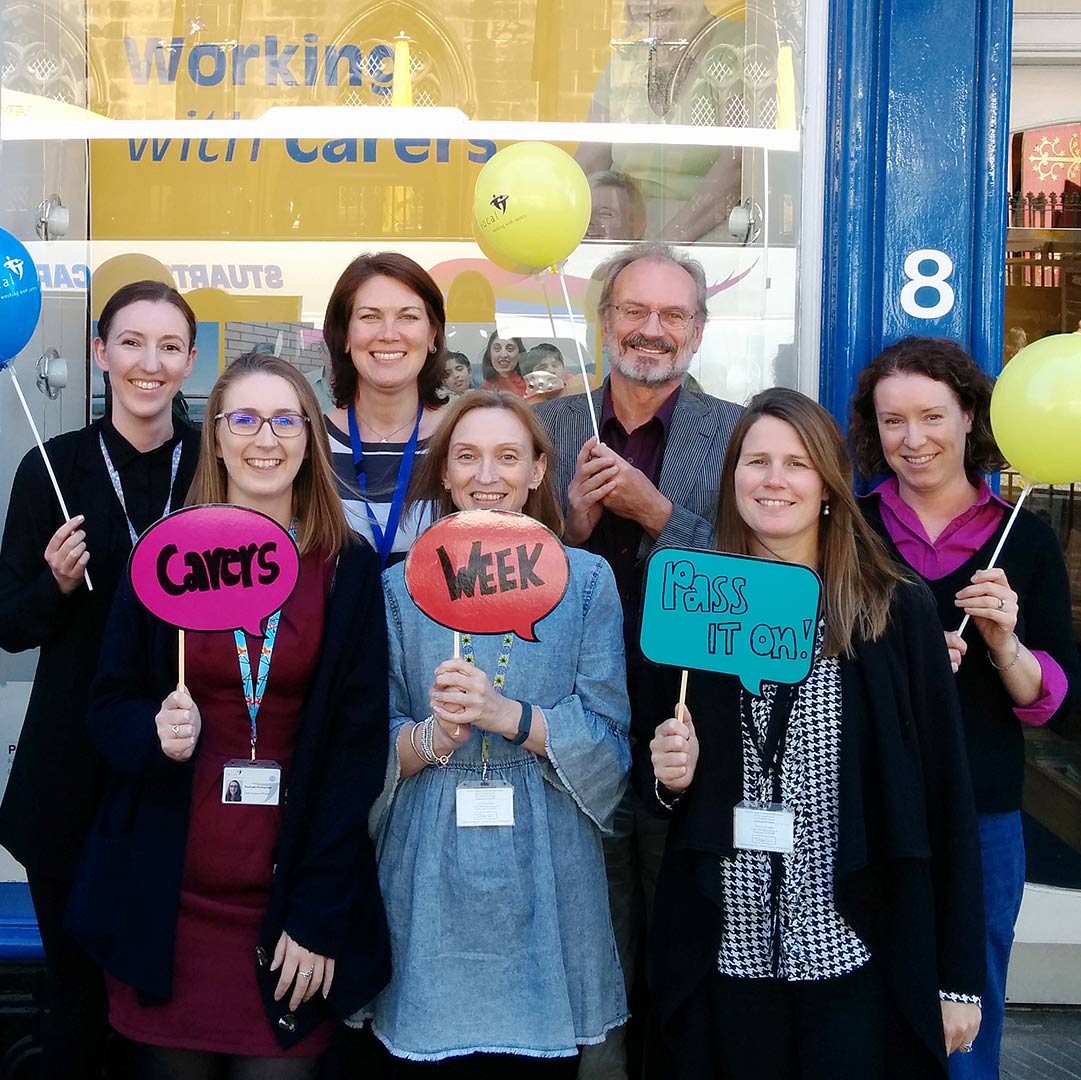
How long have you been CEO of Vocal, and how did you get there?
In 1993, family carers established VOCAL as the Voice of Carers Across Lothian. I was appointed in 1994 as their first employee. Today VOCAL supports over 8,000 carers in Edinburgh and Midlothian with 35 staff and some 70 volunteers.
Back in 1994 VOCAL was created to serve carers across Lothian Regional Council (LRC) area. But we started straight away to build strong carer organisations in East, West and Midlothian, knowing that LRC would split into four local authorities in 1996.
What are your hopes and fears for the implementation of the new Carers Act?
The Carers (Scotland) Act 2016 was the result of a 5-year concerted campaign by national and local carer groups. It had the fitting strapline “from recognition to rights.”
By 2008, the contribution unpaid carers make to society was already well recognised, but not underpinned by any statutory rights to support. Unlike the paid workforce, unpaid carers had no entitlements to support in their role, to training, breaks from caring or holidays, pension entitlements or emotional support.
We knew then, that demand on family members to care more intensively would increase steeply for years to come. The Carers Act was a response to carers’ campaigning, but sadly, it has few tangible rights enshrined in the Act. Other than getting a carer support plan instead of just being assessed, it still contains no rights to advocacy, minimum entitlements to breaks from caring, to emotional support or counselling, or rights to other supports.
One excellent success of carers’ campaigning has, however, been the increase of Carers Allowance from the lowest of all benefits to the level of Jobseekers’ Allowance, from summer 2018.
A further opportunity for improved carer support is through local authorities, who are required to develop local eligibility criteria for support. Edinburgh has led the process and already produced draft criteria. Nationally, carer organisations are involved in the development of many different pieces on guidance for the implementation of the Act from April 2018.
What is the most common misconception about being a carer?
Possibly, that many carers think they have to be ‘on a register’ or receiving carers allowance to be recognised as a carer.
We consider every person a carer who provides unpaid care to a family member, partner, relative or friend of any age who needs help to manage a long term condition, disability, physical or mental health problem or addiction.
In Edinburgh, anyone is considered a carer who supports another person from the earliest point and often prior to diagnosis – whether supported at a shared home, the person’s own home, or in a residential or hospital setting.
Is there a specific carer’s story that stands out for you?
As a principle, VOCAL does not ‘nominate’ individual carer for ‘standing out’ or put them forward nominated for an award. The impact of the caring role is unique on each person, although there are many common strands.
We therefore emphasise caring situations and trends which stand out – they often affect marginalised groups most affected by inequalities and lack of support:
- people from different cultural backgrounds who struggle to understand and access our services due to lack of cultural sensitivity and translations services
- people with multiple caring responsibilities, thousands of carers care for more than one person but are not recognised as needing additional support
- parent carers, who are often expected to cope as parents, despite additional complex demands on them and their families
- people required to care round the clock due to the intensity of support required
What can the public do during Carers Week to help support carers in Edinburgh?
Household and health surveys estimate there are some 47,000 carers in Edinburgh alone. Help us identify carers and encourage them to contact VOCAL – employers, neighbours, families and friends have a big role to play so carers access information and support early to prevent critical situations later!
Visit VOCAL’s website – www.vocal.org.uk – and social media sites. We are using the hashtags #CarersWeek and #PassItOn on both Facebook and Twitter asking people to share and pass the posts on to people who may not yet know about the support available to carers.
Finally, help us to ensure that every week is carers week – carers deserve support all year round!


Leave a Reply